
If you’re just joining the party, here’s a quick recap of what we’ve covered so far:
- Dig first, bark later. Research is the foundation of any good strategic plan.
- Fetch better results. Set clear goals and measurable objectives. Because if you don’t know where you’re going, how will you know when you get there?
- Paws for positioning & make your messaging matter. Say what you mean so the right people will listen.
Now we’re getting to the fun part. Content strategy is how you bring your positioning and key messages to life in the eyes of your audience.
Hint: Show, don’t tell!

Media mix
What channels are available to you? What channels are you active on? Where is your audience finding their information? The answers inform your media mix: the channels you’re using to get your message out there.
That third question is a big one. You need to be where your audience is, so use your audience analysis to identify priority channels.
For example, if your audience is mostly finding you through organic search (OR if search volume for what you’re offering is high but your visibility is low), it makes sense to double down on SEO. If trust is an obstacle and you are looking to build your reputation outside of your existing audience, you should be looking at media relations.
A healthy media mix is a combination of owned (website, social channels, email list), earned (media coverage) and paid (all things advertising) channels.
The key channels and tactics in your media mix will likely include your:
- Website
- Tactics: blog posts, gated content (aka lead capture mechanisms), and even your home page description and impact statement.
- Social media
- Tactics: static posts, videos/reels, ads
- Print
- Tactics: Direct mail, flyers, brochures
- Media
- Tactics: Press releases, organic pitches
- Events
- Tactics: tabling, sponsorship, thought leadership
Content pillars
For maximum creativity without the chaos, identify three to six pillars or themes to govern your entire content strategy.
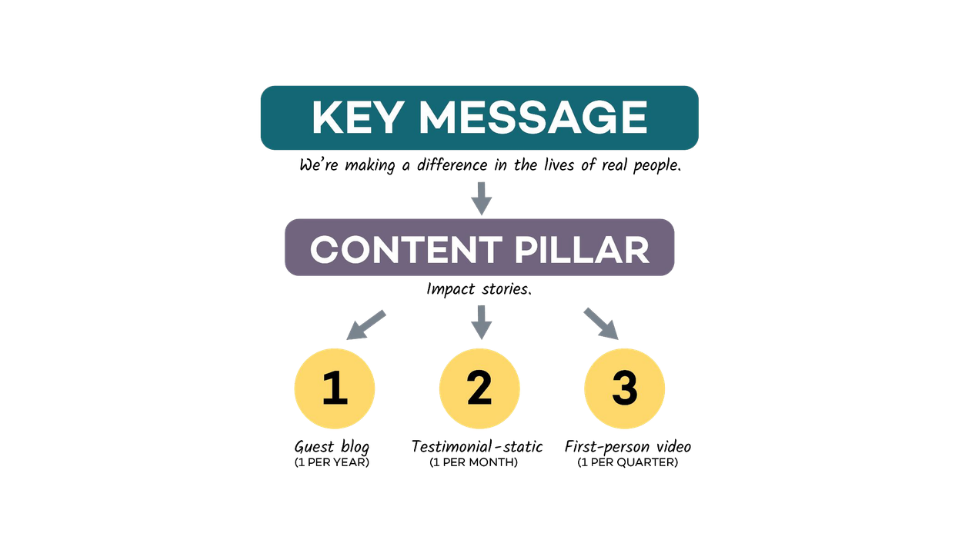
Content pillars are the major categories of what you talk about. Basically, the stories, information and communication that will support and illustrate your key messages in different ways. Remember! Every pillar should ladder up to a key message, and each post should ladder up to a pillar.
Here’s what your key messages, content pillars and post types might look like all together:
Post types and frequency
Within each pillar, sketch out your post types and frequency. Post types might include testimonials, impact stories, product highlights or tips and tricks. Identify the visuals, information and assets you’ll need for each of those post types.



Take note! You’re still building your toolkit here. For the post types you’ve identified, do you:
- Need templates designed?
- Have access to the information, photography (with permission) or design elements you’d like included in each?
- Need brand guidance on stock photography, sound selection, or video look and feel?
Now’s a great time to fill in those gaps (or, at least, to figure out what you’ll need to build as you go).
Repurposing/multi-channel strategy
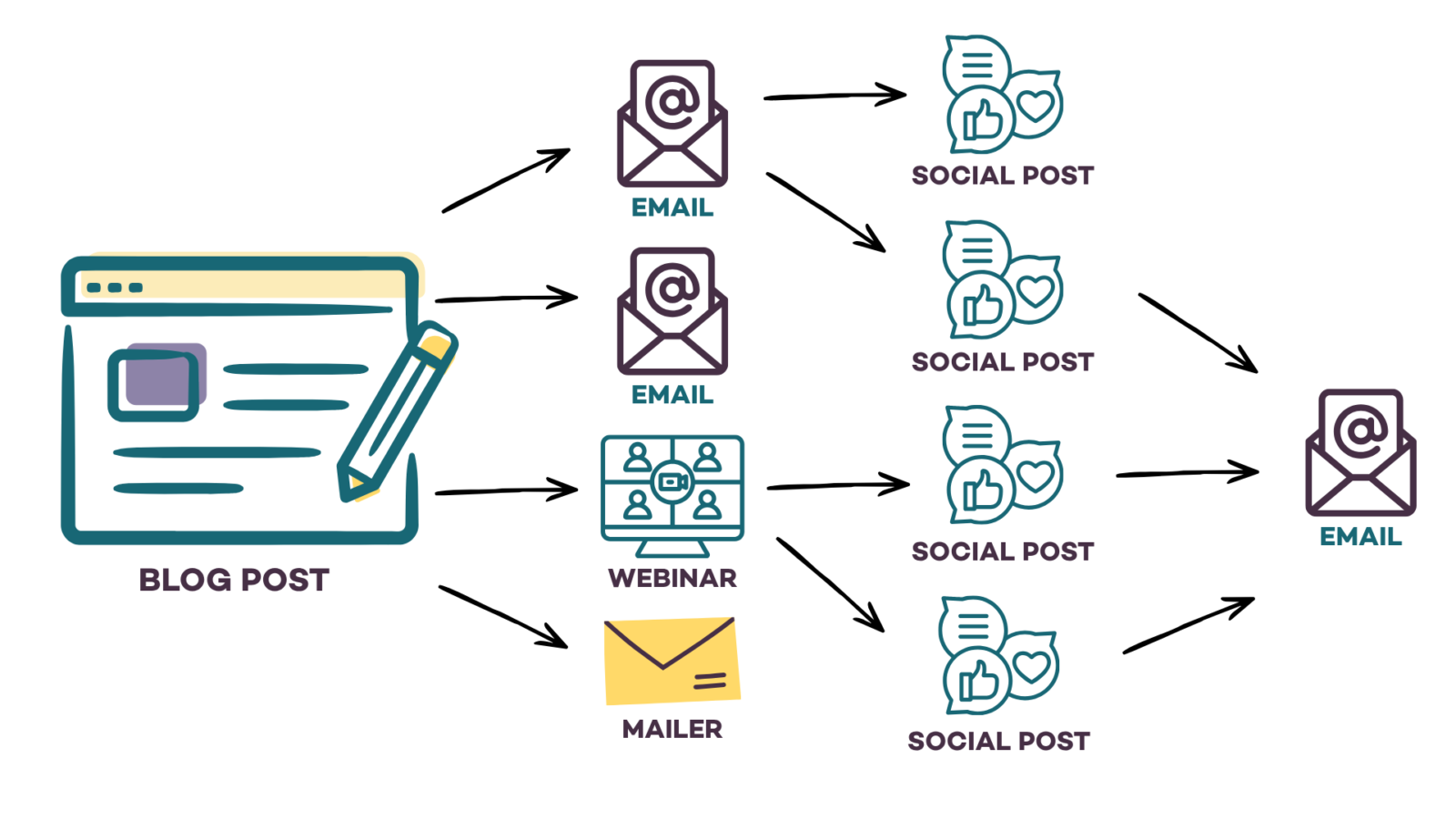
The beauty of having a few specific pillars is that they can make content creation really efficient. We’re here to encourage you to make the most of your precious creative resources and keep every piece of communication in line with your key messages to help you reach your goals and objectives.
Approach your monthly marketing as a funnel, with a single piece of apex content (often a blog post), which then acts as the source material for multiple social posts, emails, maybe even media pitches or back-link requests.
Content calendar
Now let’s turn this content into a calendar! This is the bridge between planning and execution: your roadmap to getting impactful marketing off the page and in front of your audience.
First, map your milestones. No matter your industry or niche, there are likely at least a few seasonal events or fluctuations that are bound to impact your communications every year. These might include:
- Major giving campaigns
- Recognition days or months
- Major events, predictable needs or seasonal offerings
Take some time to look back at the previous year’s content and ahead at what should be on your calendar.
Next, plug in your major channels and post types by pillar.
- Rotate through pillars on your posting schedule.
- Associate posts with milestones, apex content or campaigns.
- Set due dates for drafts, graphics and reviews to hit your target publication date.
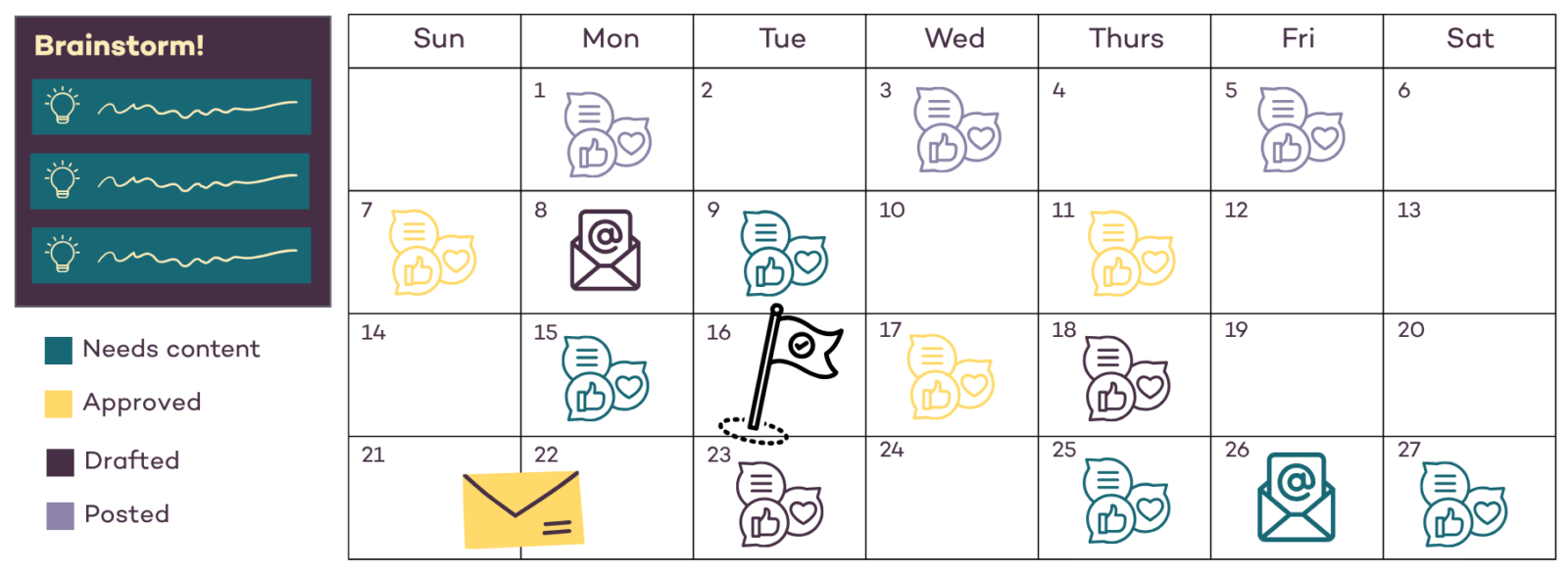
And that’s your plan of attack! Build your content calendar into your project management platform of choice or keep it simple with a good old-fashioned spreadsheet and task list.
There are literally limitless content calendar templates out there, and AI assistants are creating new possibilities every day. My advice? Resist the overwhelm. Browse for inspiration, use what you’ve got and ask for help as you make it your own.
Keep tabs on your measurement & evaluation
Remember when we said strategic marketing is goal-oriented? Setting goals is an important part of strategic planning, but measuring your progress against those goals and adjusting accordingly is what makes the actual marketing part strategic. Measure periodically, make small adjustments as you go and re-evaluate at the end of the year.
You are officially ready to hit the ground running with your strategic marketing. But you don’t have to go it alone! Sign up for our mailing list for friendly reminders, tips, tricks and YellowDog offerings, or reach out for support on any stage of your strategic planning or execution. We’re here to help you master your messaging and then bark it from the rooftops.