
It’s tempting to jump straight from big-picture strategic plans to fun campaigns, tactics, posts, blogs–you know, the stuff people actually see. But before you jump in with four feet, pretty please paws to nail down your marketing fundamentals. Not the scary, jargon-heavy kind. The kind that actually helps you sound like yourself, stand out from the pack and connect with the right humans.

This edition to our strategic planning series is all about messaging and positioning—what you say, how you say it and what you want people to think of when they hear your name. If marketing ever felt intimidating or vague, don’t worry. We’re about to defang it.
Foundation first! We highly recommend you start your strategic planning for marketing with research and goals. Go ahead, read up on parts one and two of this series to set a strong foundation. We’ll wait.
Ok, not that you’ve laid the groundwork, you’re ready to craft messaging that matters.
Marketing speak, translated
At its core, messaging is simply how you describe who you are, what you do and why it matters. Clear messaging builds trust, consistency and recognition—without a giant budget or a marketing degree.

We like to break messaging down into three key elements.
1. Elevator pitch (aka brand description)
This is the quick scoop on your organization, distilled into the clearest, most accurate blurb possible. If someone asks what you do and you only have one breath—or one sentence—this is what comes out.
At YellowDog, we strongly recommend two versions handy:
- One-sentence brand description (perfect for social bios, introductions, taglines)
- One-paragraph brand description (great for websites, partnerships, proposals)
When these are dialed in, everything else gets easier. No more reinventing the wheel every time someone asks, “So… what do you do?”
Quick reality check: one breath is not very long. Neither are modern attention spans. Accept that you won’t be able to fit every single thing that makes your work special into your elevator pitch. Bummer? Sure. But turn that frown upside down—there’s plenty of room in the doghouse for those additional ideas in the form of key messages.
2. Key messages: What do you want people to know?
Key messages are the big ideas you want your audience to walk away with. Think of them as the backbone of your communication—not a script you repeat word-for-word.
Typically, this looks like:
- 4–8 clear sentences or phrases,
- Each reinforcing something important about your work, values or impact
You may never publish these messages exactly as written—and that’s the point. They act as core concepts that all your content supports, illustrates and brings to life in different ways.
If your marketing were a house, key messages would be the load-bearing walls. Seldom seen, always working.
3. Brand voice: How do you sound?
Brand voice defines your organization’s personality and style of speech across channels. This is where you decide how you show up in the world.
Ask yourself:
- Are we playful or buttoned-up?
- Warm and inviting, or bold and challenging?
- Whimsical? Serious? Data-heavy? Conversational?
A strong brand voice also includes how you want people to feel when they interact with you—encouraged, inspired, reassured, energized.
Pro tip: A clear brand voice is incredibly helpful when using AI tools. Define it once, include it in every prompt or content request, and create efficient, consistent content (robot voice not included).
Positioning: Claiming your spot in the dog park
Positioning answers one big question: What do you want people to think of when they think of your organization?
It’s about how you set yourself apart in your space. To identify your ideal position, ask yourself:
- What’s your niche?
- What makes you different?
- Why should someone choose you instead of another option?
Your positioning statement articulates that competitive edge.
Now, how close are you to actually occupying that position? No shade if you’re not there yet. That’s kind of why we’re here. Your marketing strategy is your roadmap from the position you hold to the position you seek (not just from your perspective, but in the hearts and minds of your audience). You can close that gap with messaging that is clear, consistent and credible.
Key messages by audience: One size rarely fits all
Different audiences care about different things. They have different motivations, pain points and reasons for engaging with you. So while your core message stays the same, how you talk about it should shift by audience.
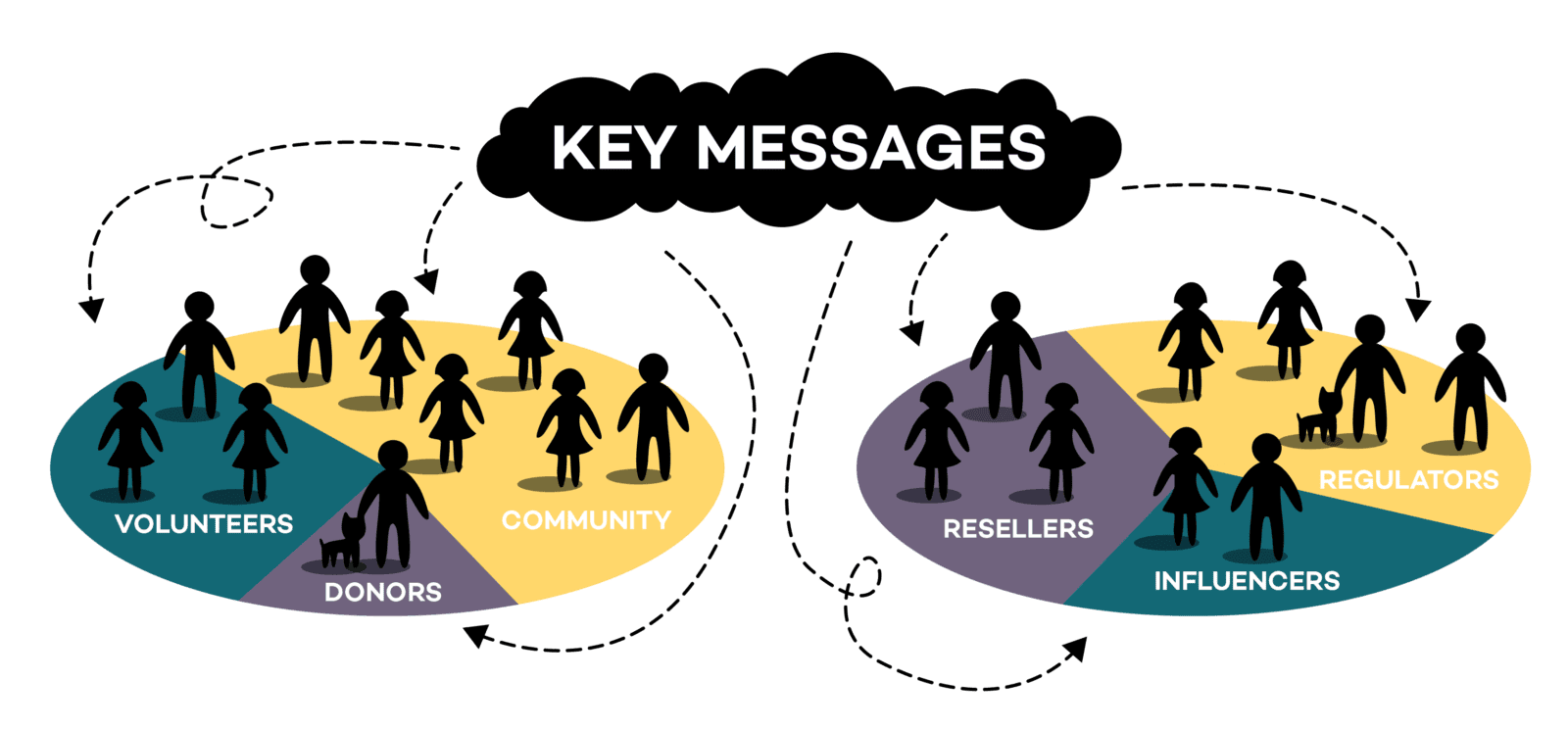
Remember that research we did back in part one? Time to put it to work. Using what you learned in your audience analysis:
- Segment your audience thoughtfully
- Tailor key messages for each group
- Personalize communications for greater impact
That might mean:
- Entirely different content for different audiences
- Or simple personalization using merge tags (first names, donor type, history, etc.)
Push the personalization envelope. Merging in first names to email communication is a great place to start. You can build from there with specific program mentions (thanks for supporting *|PROGRAM|*) and geographical callouts (We’re proud to serve *|TOWN|*). But it doesn’t stop there! Did you know you can also use segments and merge tags to personalize print?
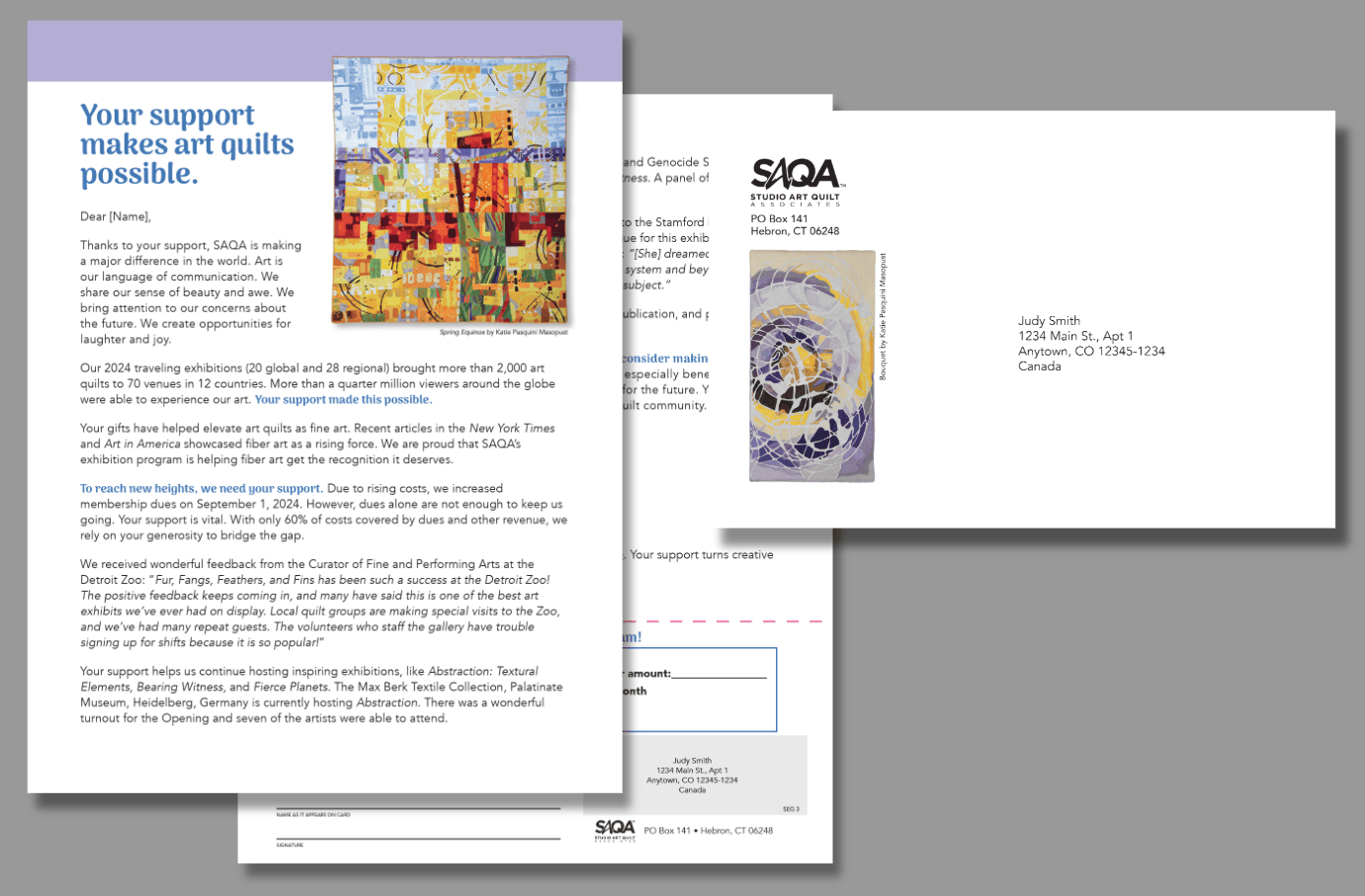
One of YellowDog’s long-time nonprofit clients, Studio Arts Quilt Association, absolutely nails this in annual direct mail giving campaign. They don’t send separate mailers—they send smarter ones. Small donors and major contributors receive different messaging and return envelopes based on giving history.
That one layer of customization significantly increases results, without blowing up the budget or workload. Same tactic. Better targeting. Bigger impact.
Messaging: the horse that goes before the content cart
Messaging and positioning come before content for a reason.
If you don’t know:
- What you’re trying to say
- Who you’re saying it to
- What you want them to believe
Then content becomes noisy, inconsistent and exhausting to produce.
When these foundations are solid, content strategy becomes easier, clearer and far more effective—which is exactly where we’re headed next in this series.
Need a hand translating all this?
If this feels like a lot—totally normal. Messaging and positioning are deceptively tricky, especially when you’re deep inside your own organization.
That’s one of our favorite places to help.
At YellowDog, we partner with small teams to:
- Clarify messaging
- Define brand voice
- Articulate positioning
- Build marketing strategies that it real life
No jargon. No judgment. Just smart strategy, thoughtful design and a collaborative process that makes sense.
Stick around—the next post is where we turn all of this into a content strategy you can actually execute. 🐾